
Sand Springs sits along the north bank of the Arkansas River, a few miles downstream from Keystone Dam. When heavy rain upstream forced large releases from the dam in 2019, river water reached homes in low parts of town and put real stress on the levee system. For a lot of homeowners, that was the first time they looked closely at their crawl spaces.
Floodwater under a house leaves more than mud. Insulation hanging between the joists soaks it up and sags, wood stays wet for weeks, and mold can take hold quickly in summer heat. Even homes that did not flood saw higher groundwater and damp soil for months afterward.

The north side of Sand Springs is a different story. The ground rises into hills, and homes up there deal with runoff from above rather than water from the river. Older houses near downtown, many dating back to the town's early industrial years, fall somewhere in between, with aging piers and damp soil but less direct flood exposure. Our free inspection looks at which situation your home is in and what it needs now.
Around Sand Springs
Places we work in and around Sand Springs include:
- Older homes near downtown Sand Springs
- Neighborhoods on low ground near the Arkansas River
- Homes protected by the levee system along the river
- Hillside houses on the north side of town
- Rural properties toward Keystone Lake
- Homes along the US-412 corridor
Crawl Space Notes for Sand Springs Homes
- After any flood, wet fiberglass insulation should come out; it does not dry well and holds moisture against the wood.
- Homes in a mapped flood zone may need flood openings in the foundation, so check before sealing every vent.
- Hillside homes north of town often need a curtain drain on the uphill side more than a sump.
- Mud left behind after high water should be removed before a liner goes down, or it holds moisture underneath.
Most Requested Crawl Space Services in Sand Springs

Crawl Space Mold Removal in Sand Springs
Homes that took on river water often need mold treatment on joists and subfloor.
Learn more
Crawl Space Waterproofing in Sand Springs
Low-lying and hillside homes both need water managed before the crawl space can stay dry.
Learn more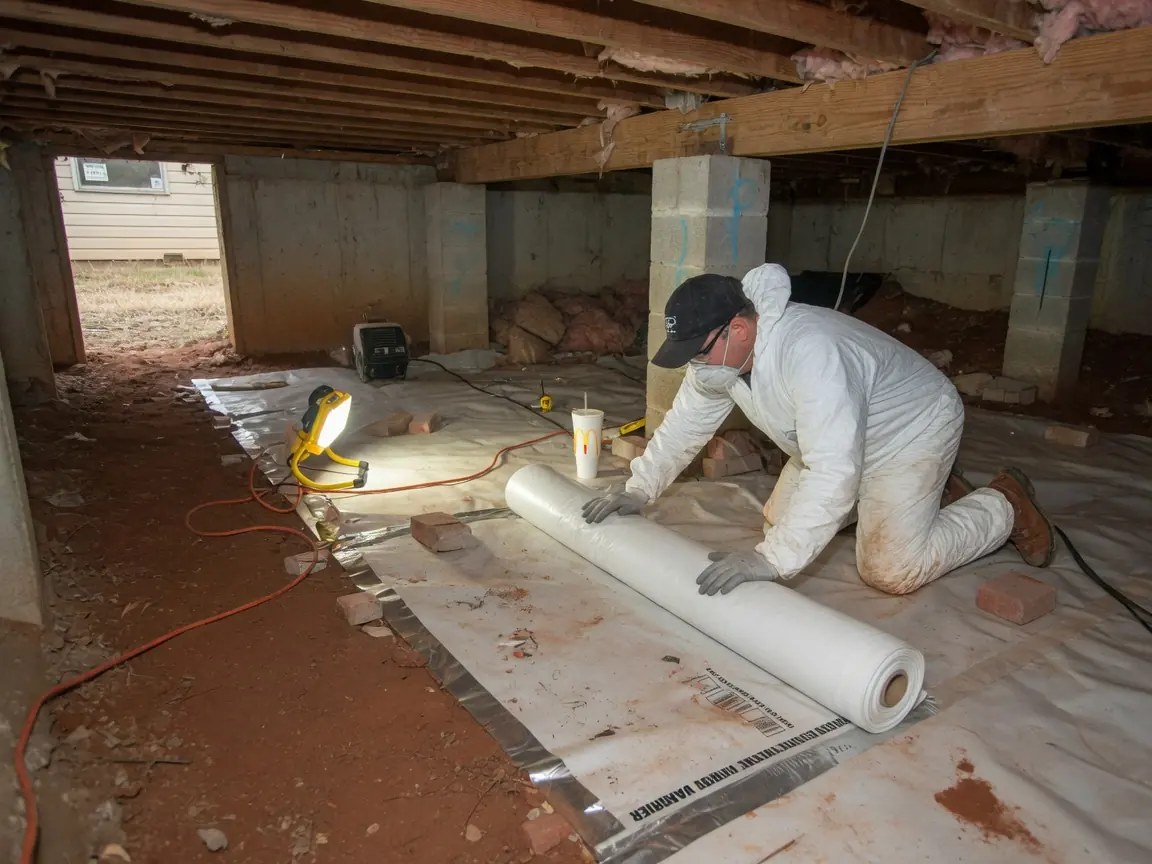
Crawl Space Vapor Barrier Installation in Sand Springs
A new liner over clean, dry soil helps after flood cleanup is finished.
Learn moreSloping or bouncy floors in Sand Springs?
Structural problems get their own page: pier and beam foundation repair in Sand Springs covers piers, shims, beams and leveling costs for local homes.
After High Water: Drying Out a Flooded Crawl Space
If river water or heavy runoff reaches your crawl space, the first step is getting the water out and letting air move. Then the wet insulation, mud and debris come out. Wood needs time to dry, and we check moisture readings before any treatment or liner goes in.
Insurance is worth sorting out early. Standard homeowners policies usually exclude flood, while a separate flood policy may cover part of it. Our post on insurance and crawl space repair covers what is usually included and what is not. Take photos of the water line, the insulation and any damaged wood before cleanup starts, because an adjuster will want to see them.
What Affects Crawl Space Repair Costs in Sand Springs
Flood cleanup in Sand Springs usually starts with removing wet insulation and debris at $1.00 to $2.00 per sq ft. Mold treatment for a typical crawl space runs $1,500 to $4,500, and heavy growth can reach $4,500 to $8,000. A new 12 to 20 mil liner costs $1.50 to $2.50 per sq ft. We put the full plan in a free written quote so you can match it to insurance coverage.
