Why Don't Most Oklahoma Homes Have Basements?

The Short Answer
People who move to Oklahoma from the Midwest or the Northeast are often surprised to find that very few houses here have basements. The reasons are practical, not mysterious. Oklahoma's ground rarely freezes deeply, so footings do not need to go far down. Much of the state sits on clay that swells when wet and shrinks when dry, which is hard on tall underground walls. In some areas groundwater sits close to the surface. Add the cost of digging and waterproofing, and most builders simply chose another way.
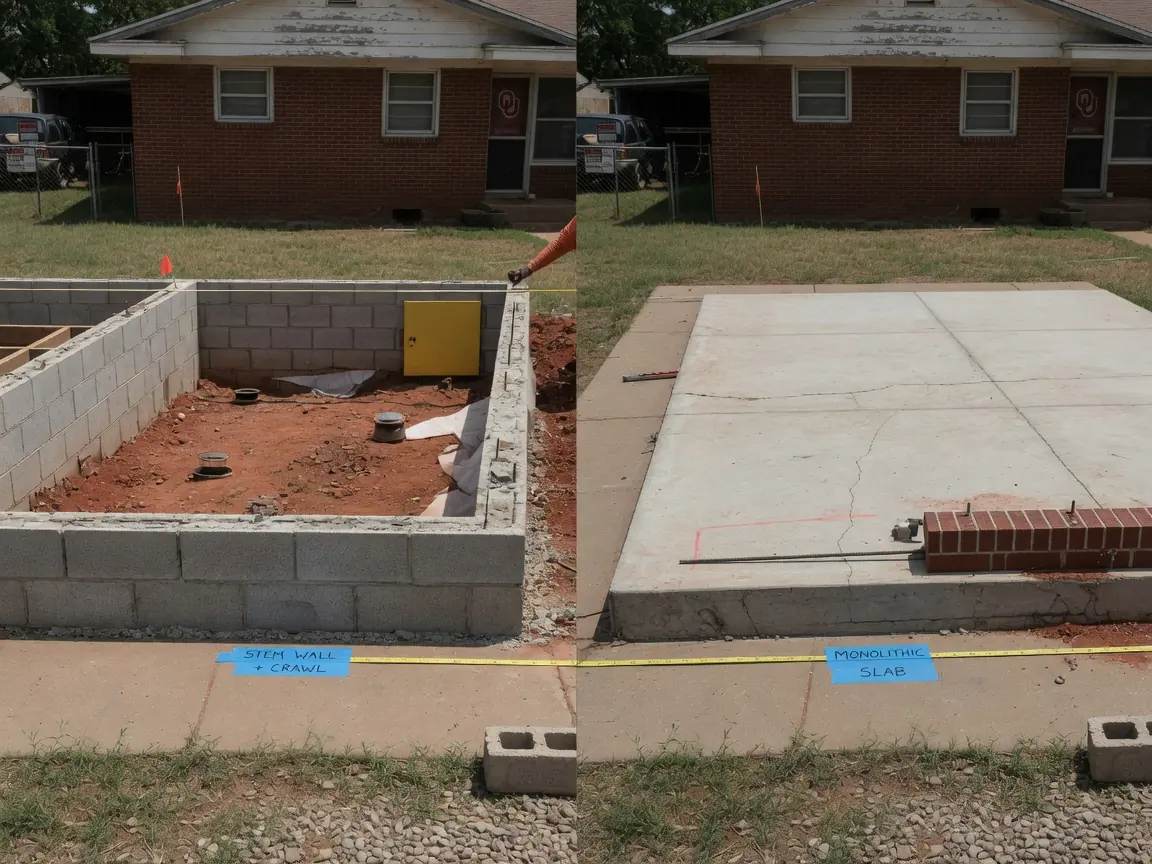
The result is that the typical Oklahoma home rests on either a concrete slab or a raised floor over a crawl space. Knowing why helps you understand the problems your own foundation is likely to have and how to keep them in check.
Shallow Frost Depth Means Shallow Footings
In cold climates, footings must sit below the frost line so that freezing soil does not heave the house. In Minnesota or Michigan that can mean four feet or more. Once a builder has to dig that deep anyway, adding a few more feet for a full basement is a small step, and the basement becomes almost a bonus.
Oklahoma winters are milder. Frost depth across most of the state is shallow, and local codes set footing depths far less than in northern states, with the Panhandle running a bit deeper than central and southeastern Oklahoma. Your city or county building department sets the exact figure. Because footings can stay near the surface, there is no built-in reason to dig a big hole, and the extra excavation for a basement becomes a pure added cost.
Clay Soil That Swells and Shrinks
Large parts of Oklahoma have expansive clay soils, including the red clays common in the central part of the state. These soils take on water after heavy rain and swell, then dry out and shrink during summer heat and drought. That cycle puts real pressure on anything buried in it.
A basement wall is a long, tall surface with soil pushing against it from the outside. When expansive clay swells, it can push hard enough to crack or bow those walls, and when it shrinks it leaves gaps that let water run down along the foundation. Basements can be built well in clay, but it takes good drainage, careful backfill and solid wall design, all of which add cost. For more on how these soils behave, read Oklahoma red clay and your crawl space.
Water Tables, Rock and Drainage
Some parts of Oklahoma, especially near rivers and in low ground, have water tables that rise close to the surface after wet spells. A basement in that kind of spot can act like a tub, and keeping it dry means drains and sump pumps that run for the life of the house. Other areas have rock or shale close to the surface, which makes digging slow and expensive.
Heavy spring storms also matter. When several inches of rain fall in a short time, clay soil cannot absorb it quickly, and water collects against foundations. A shallow foundation is far easier to keep dry than a room set eight feet into the ground.
Even a crawl space only a few feet deep can collect water when the yard drains toward the house. That is a good reminder that the same forces that discouraged basements still act on shallow foundations. They just do less damage when the floor sits close to grade and the problem is caught early.
Cost and Building Habits
Much of Oklahoma's housing went up in fast building periods, especially after World War II and again as suburbs spread in later decades. Builders were looking for designs that were quick and affordable. Pier and beam and crawl space homes were common in older neighborhoods. Concrete slab on grade became very common in many newer subdivisions because it is fast to pour and needs no excavation.
Once local crews, lenders and buyers were used to slabs and crawl spaces, the habit stuck. A basement in Oklahoma is often a custom request today rather than the default.
Building a basement later is rarely practical either. Digging under an existing house means supporting the structure, hauling out large amounts of soil and building waterproofed walls, which costs far more than most owners would ever recover. For extra space, most Oklahoma families add on, finish an attic or build a detached shop instead.
Storm Shelters Took the Basement's Place
In other states a basement doubles as a tornado shelter. In Oklahoma, many families instead install an in-ground storm cellar, an under-garage shelter or an above-ground safe room. These are built specifically to resist high winds and flying debris and cost far less than a full basement.
If you are thinking about adding protection, a dedicated shelter or safe room is usually the more practical choice. Just keep it separate from your crawl space plans, since a crawl space is not a storm shelter and is not designed to be one.
What This Means for Your Home
Because most Oklahoma homes sit close to the ground, the soil and water around the house have a direct effect on the floors you walk on. The common problems we see are tied to that close contact:
- Humid air and ground moisture in crawl spaces, leading to musty smells, mold and damp insulation
- Interior piers that settle or shift as clay soil moves, causing sloping or bouncy floors
- Water pooling under the house after storms because of poor grading or short downspouts
- Slab homes with cracks in drywall or brick as the soil under the edges swells and shrinks
If you are not sure which type of foundation you have, our guide to stem wall vs monolithic slab foundations walks through how to tell. If your crawl space takes on water, crawl space waterproofing is usually the first fix.
Mark Bennett and our crew work from a shop in south Oklahoma City and schedule free inspections across the state, including crawl space repair in Oklahoma City. Call (405) 719-2657 and we will look at what your home actually sits on and give you a written quote if anything needs work.
Want a free quote?
Call (405) 719-2657 or use the form for a free inspection and written quote.